Masters Roofing And Construction Ltd

RESTEC liquid applied roofing

A new waterproof roof, without tearing the old one off.

Liquid applied roofing is a cold-applied, fibre-reinforced membrane that cures seamlessly over the whole roof — including every upstand, outlet and pipe. Dean is a RESTEC trained installer, so the system can carry manufacturer-backed cover as well as ours.

  • RESTEC approved installer
  • 20-year manufacturer guarantee
  • Cold applied — no hot works
  • Often no strip-out needed
01 — What it actually is

Waterproofing that is painted on, then reinforced.

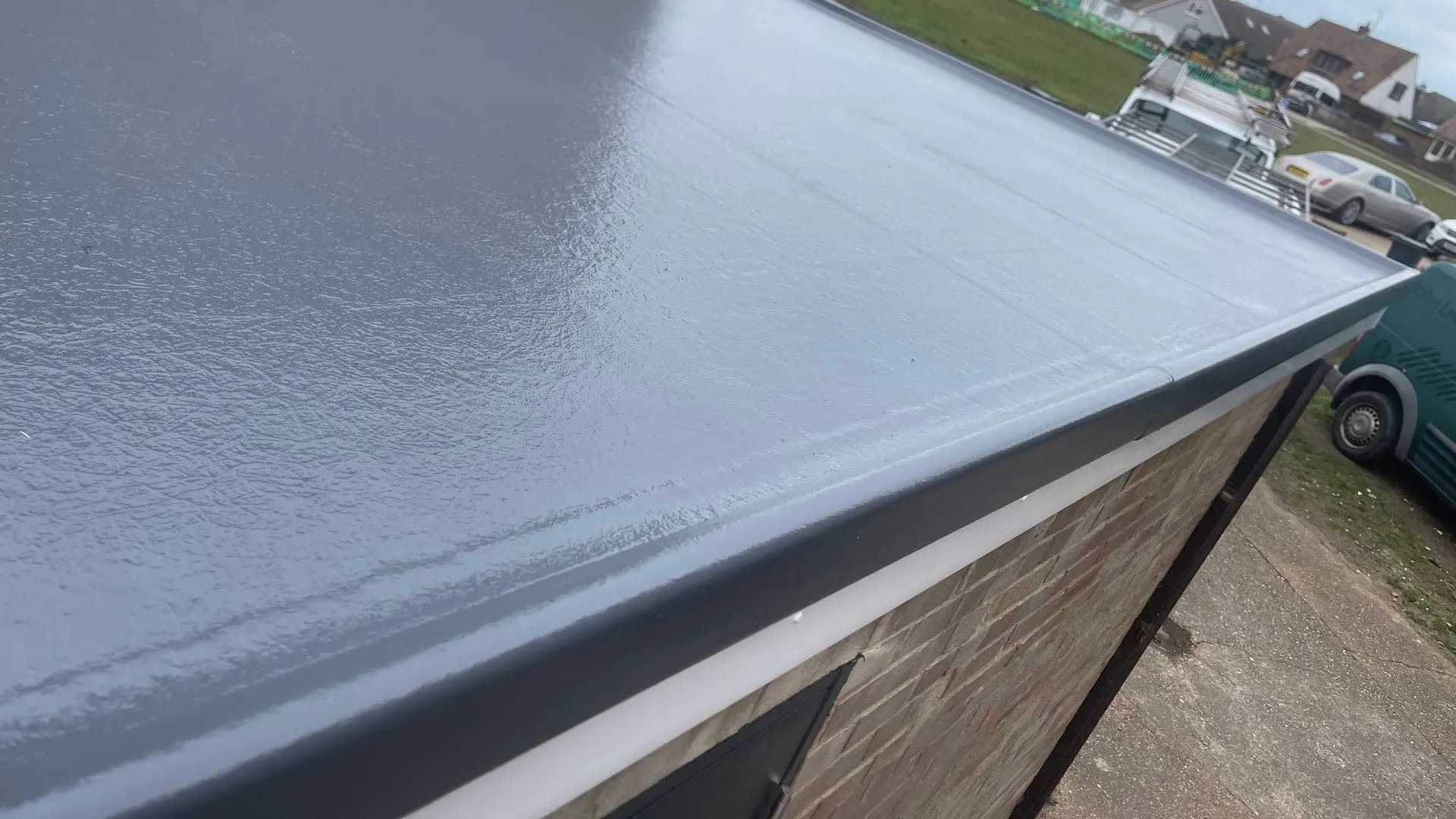
A liquid system goes down as a resin rather than as a sheet. A base coat is applied to the prepared roof, a reinforcing fleece is bedded into it while it is still wet, and a top coat is applied over that. It cures into a single fibre-reinforced membrane that is bonded to the roof across its whole area, with no laps, welds or joints anywhere in it.

The reason we reach for it is detailing. A sheet system has to be cut and joined around every outlet, soil pipe, upstand, rooflight kerb and plinth, and those cuts are where flat roofs leak. A liquid system just runs over and around all of it in one continuous piece, which is why it is so often specified for roofs that are complicated rather than large.

The second reason is that it is cold applied. There is no torch, no gas bottle and no hot works on your property — which matters a great deal on an occupied building, a listed one, a school, or anywhere an insurer takes a dim view of naked flame on the roof.

And because it bonds to what is already there, a sound roof usually does not need stripping off first. That saves the tear-off, the skip and the disposal, and it means the building stays watertight throughout instead of being opened up to the weather.

02 — Is your roof a candidate

When an overlay works, and when it doesn’t.

Liquid systems are genuinely excellent, and they are not a way of papering over a dead roof. This is the test we apply on the survey.

  • A good candidate

    20–25 years

    Sound deck, failing covering, leaks at the joints and details

    The structure underneath is dry and solid, but the felt or asphalt over it has gone brittle, split or lifted at the laps. This is the ideal case: you keep the roof you have and get a new, seamless waterproof layer over it.

  • A good candidate

    20–25 years

    Complex roofs, and buildings where hot works are a problem

    Roofs carrying plant, pipework, rooflights, multiple upstands or awkward abutments, and occupied or sensitive buildings where a torch on the roof is not acceptable to you or to your insurer.

  • Needs work first

    Ponding water, or a covering that is loose in places

    Fixable, but not by coating over it. Falls have to be corrected and loose areas cut out and made good before anything is applied, and we would price that in openly rather than hoping the resin hides it.

  • Not a candidate

    Wet, soft or rotten decking

    If the deck is saturated, a liquid system seals the water in rather than out, and the roof will fail from underneath. That roof needs stripping and replacing, and we will tell you so even though it is the more expensive answer.

03 — How it goes on

Preparation is most of the job.

The application itself is quick. Everything that decides whether it lasts happens before the first coat.

  1. Survey and moisture check

    We get on the roof and establish whether the deck underneath is genuinely dry and sound, because that is the whole basis of an overlay. Where there is any doubt, we cut a test area and look rather than assume.

  2. Clean, prepare and prime

    The existing surface is cleaned back, loose material cut out and made good, blisters opened and flattened, and the roof primed with the primer specified for that substrate. Different substrates take different primers, and using the wrong one is a bond failure waiting to happen.

  3. Base coat and reinforcement fleece

    The base coat goes on wet and the reinforcing fleece is bedded into it and rolled out so it is fully wetted through with no air behind it. This is the layer that gives the membrane its strength and its ability to bridge small movement.

  4. Details, upstands and outlets

    Every upstand, outlet, pipe collar, kerb and abutment is reinforced and taken out in one continuous piece with the main field. No cutting in, no separate flashing to fail later — this is the reason for choosing a liquid system in the first place.

  5. Top coat and handover

    The top coat seals the membrane and provides the UV-stable wearing surface. Site cleared, and your written guarantee issued on completion — with manufacturer-backed cover registered where the project qualifies for it.

04 — What backs it

The guarantee comes from the manufacturer, not just from us.

Liquid systems are only warranted when they are installed by someone the manufacturer has trained and approved. That approval is the difference between a coated roof and a guaranteed one.

  • Dean is a trained and approved installer for RESTEC Flexitec 2020, the flexible GRP system. That approval is not a badge — it is the thing that lets him register your roof with RESTEC on completion, so the materials carry their 20-year manufacturer guarantee alongside our own written workmanship guarantee. Only installers holding a current training ID can offer it.
  • A 5–10 year written workmanship guarantee from us, plus a leak-free guarantee on new installations
  • SIG Roofing One Warranty also available on qualifying projects
  • Installed to the manufacturer’s specification, which is what the warranty requires
  • Checkatrade vetted with 12 checks passed, CSCS carded and fully insured
05 — What it costs

What moves the price.

A liquid overlay is very often cheaper than a full replacement, because you are not paying for a strip-out, a skip or the disposal. What it costs on your roof depends on these.

  • The area of the roof, and the condition of what is already on it
  • How much preparation is needed: cutting out loose areas, opening blisters, correcting falls
  • The amount of detailing — every upstand, outlet, pipe and kerb is hand-worked
  • The substrate, which decides the primer and sometimes the system
  • Access and scaffolding
  • Whether the specification needs to qualify for manufacturer-backed cover

Free inspection and a free written quotation setting out the system, the preparation included, and what cover it carries.

Get a Free Quote
06 — Recent work

Flat roofing across Sussex.

Recent flat roof work across Worthing and the surrounding postcodes. Ask us for liquid applied references at survey.

08 — Common questions

GRP Fibreglass: the questions we get asked.

RESTEC is a UK roofing systems manufacturer whose liquid applied range is installed cold and cures into a seamless, fibre-reinforced waterproof membrane. Installers are trained and approved by the manufacturer to fit it, and Dean holds that approved installer status — which is what allows the systems he fits to be backed by RESTEC’s 20-year manufacturer guarantee, on top of our own written workmanship guarantee.

Usually, yes — that is one of its main advantages. It bonds over felt, asphalt, concrete, single-ply and GRP, provided the deck underneath is dry and structurally sound and the surface is properly prepared and primed. The one thing it cannot do is rescue a wet or rotten deck, so the survey checks that first.

Typically 20 to 25 years depending on the system specified and the thickness applied, and it can be recoated at the end of that rather than stripped and replaced. Preparation is what decides whether you get the top or the bottom of that range.

Much less than a replacement. There is no strip-out, no skip on the drive and no torch or hot works, and the building stays watertight throughout because nothing is opened up. Most domestic roofs are done inside a few days, weather permitting — the coats need dry conditions to cure.

It is better for some roofs and worse for others. If your deck is sound and the roof is heavily detailed, a liquid system is often the best answer available. If the deck needs replacing anyway, you are stripping the roof regardless, and at that point GRP or a membrane may well give you longer for the money. We will tell you which case you are in.

Yes, and that is one of the situations it is clearly best at. It runs continuously around pipe penetrations, plinths, kerbs and supports without any cut-in flashings, which removes most of the joints a sheet system would need in exactly the places that are hardest to keep watertight.

Find out if your roof can be overlaid.

Send a couple of photos and your postcode. Dean will tell you honestly whether a liquid system is the right answer or whether the roof needs replacing — usually the same day.

Free written quotation

Get a free quote.

Tell us about the problem and Dean will come back to you personally, usually the same day.

Address
55 Grafton Road, Worthing, BN11 1QY
Hours
Emergency call-out 24/7

9.84/10 · 73 reviews · Fully insured · Free written quotations

We’ll come back to you personally. No call centres, no automated chasing.