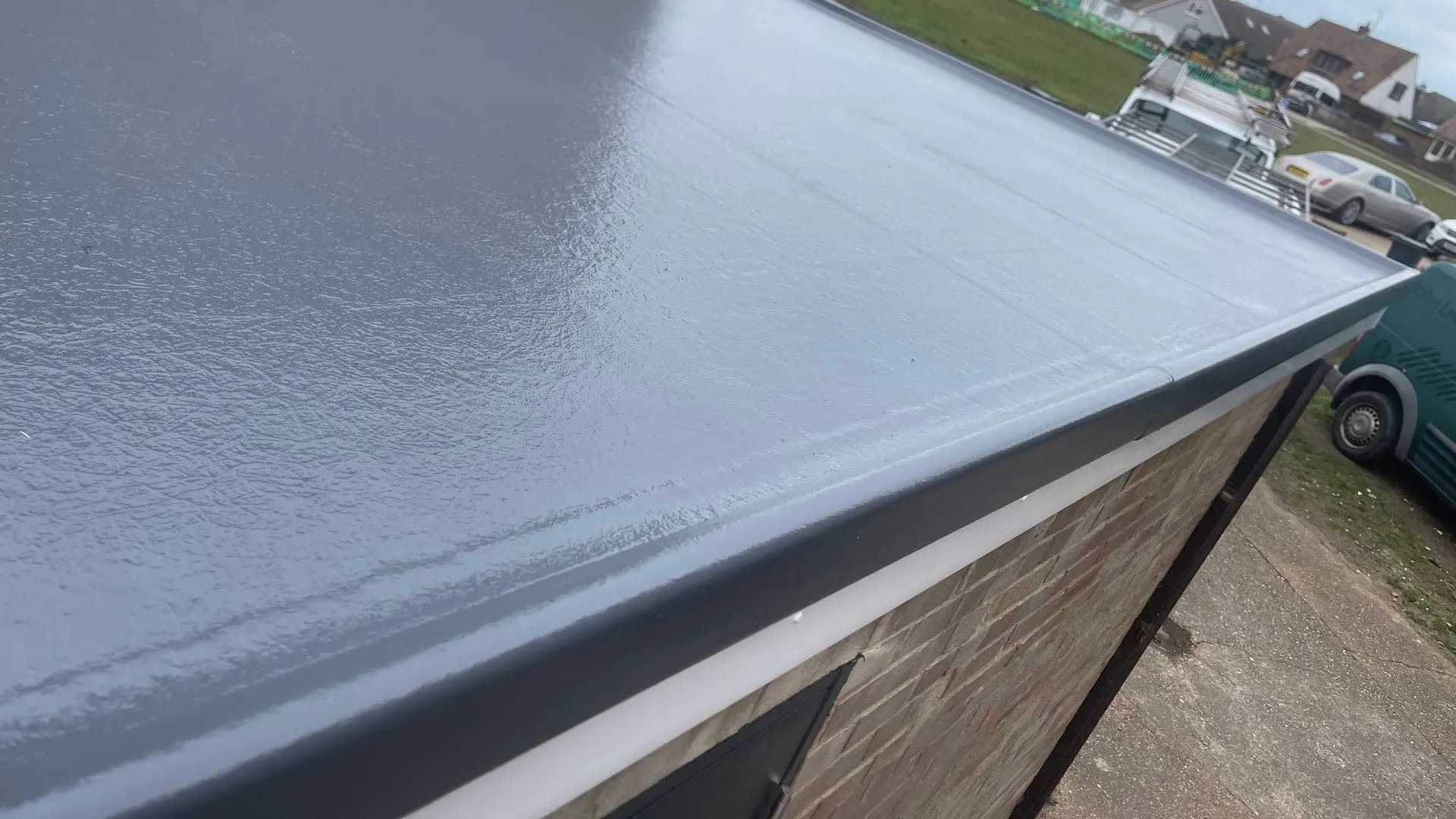
A liquid system goes down as a resin rather than as a sheet. A base coat is applied to the prepared roof, a reinforcing fleece is bedded into it while it is still wet, and a top coat is applied over that. It cures into a single fibre-reinforced membrane that is bonded to the roof across its whole area, with no laps, welds or joints anywhere in it.
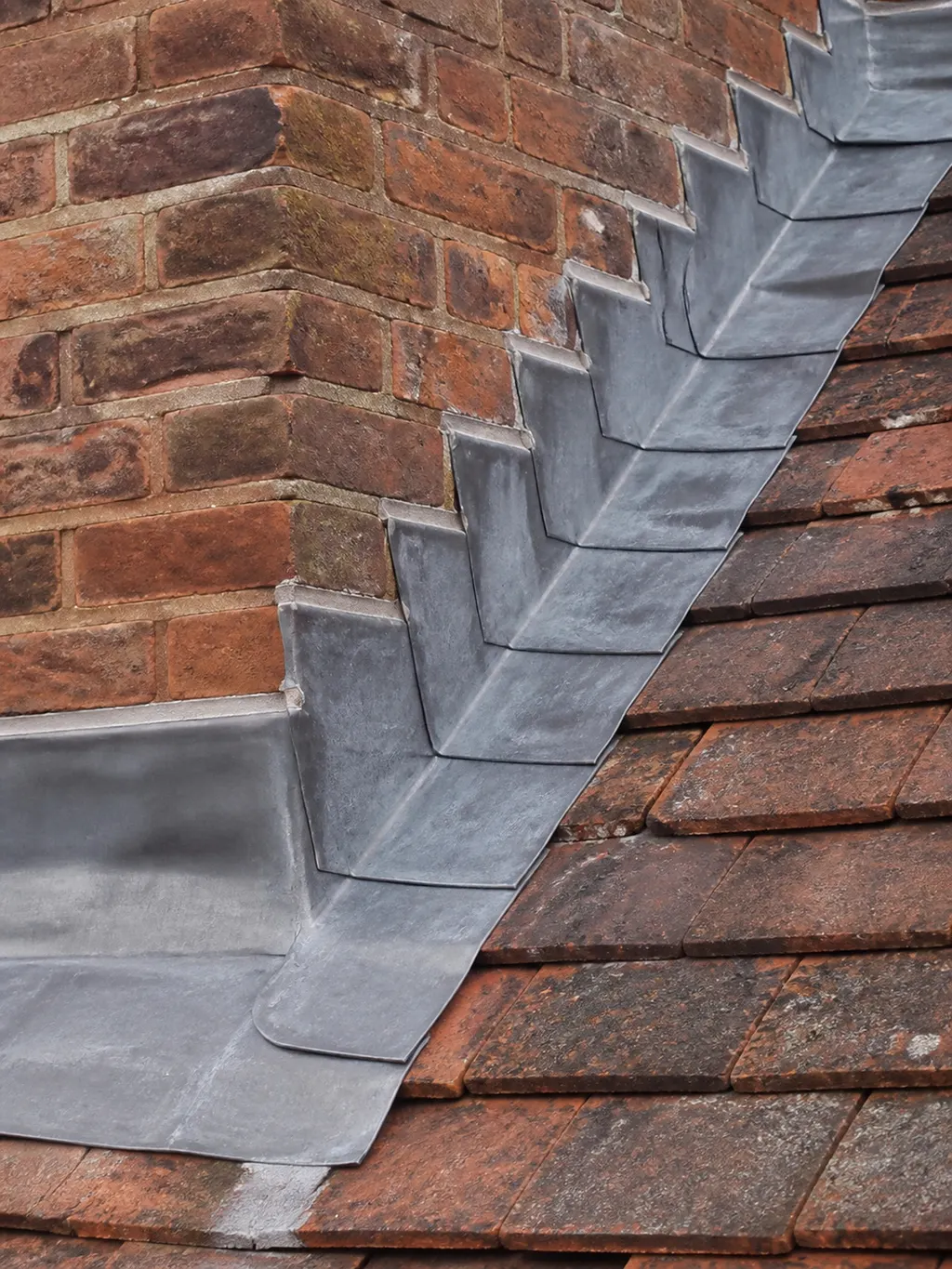
The reason we reach for it is detailing. A sheet system has to be cut and joined around every outlet, soil pipe, upstand, rooflight kerb and plinth, and those cuts are where flat roofs leak. A liquid system just runs over and around all of it in one continuous piece, which is why it is so often specified for roofs that are complicated rather than large.
The second reason is that it is cold applied. There is no torch, no gas bottle and no hot works on your property — which matters a great deal on an occupied building, a listed one, a school, or anywhere an insurer takes a dim view of naked flame on the roof.
And because it bonds to what is already there, a sound roof usually does not need stripping off first. That saves the tear-off, the skip and the disposal, and it means the building stays watertight throughout instead of being opened up to the weather.