Masters Roofing And Construction Ltd

Roof repairs & re-roofing

Repair it or replace it. We’ll tell you which.

Slipped and broken tiles, failed ridges and verges, leaking valleys, chimneys and full strip-and-re-cover across Worthing and West Sussex. We get up on the roof and find the actual cause before we price anything — and where a repair genuinely solves it, a repair is what we will recommend.

  • Free roof inspections
  • Repair or replace, honestly
  • 5–10 year workmanship guarantee
  • 24/7 emergency call-out
01 — The honest version

Roofs rarely fail in the middle.

A pitched roof has one job — shedding water — and six places where that job is decided: the ridge, the hips, the verges, the valleys, the abutments and the chimney. Almost every leak we get called to is at one of those six. The open field of tiling in between is usually doing fine.

That changes the answer more than people expect. A roof with sound tiles, sound battens and a cracked mortar ridge does not need replacing; it needs the ridge stripping and redoing, ideally dry-fixed so it never goes again. A roof where the felt underneath has perished and the battens have gone soft is a completely different job, and no amount of pointing will rescue it.

The only way to tell those two apart is to get up there and lift a few things. That is why the inspection is free, and why we will not price a roof off a photograph taken from the pavement.

02 — Repair, overhaul or re-roof

Three answers, and they cost very different amounts.

People tend to assume it is repair or replace. There is a third option in between that suits a lot of Sussex roofs, and a fourth that costs nothing at all. This is roughly how we decide.

  • Localised repair

    Extends current life

    A handful of slipped or cracked tiles, a failed flashing, a leaking valley, a blown ridge

    The covering is sound and one detail has let go. We replace like for like, re-bed or dry-fix what has failed, and leave the rest of the roof alone. Most of these are a half-day to a day, and they are the majority of what we do.

  • Strip and re-lay

    20–30 years

    Tiles still in good order, but battens, felt or bedding that are not

    The existing tiles come off and are sorted, the battens and membrane are renewed, and the sound tiles go back on with new ones making up the shortfall. It costs meaningfully less than a full re-roof because you are not buying a whole roof’s worth of tiles — and on a clay or handmade tile it keeps the look of the house.

  • Full re-roof

    40–60 years

    Coverings that have reached the end, or roofs where too many tiles are broken to reuse

    Full strip, structure checked and repaired, new breathable membrane, new treated battens, new covering and new details throughout. It is the expensive answer and we only recommend it where a repair would be money spent twice.

  • Leave it alone

    Roofs that look tired but are working

    Moss, lichen and a weathered colour are not, on their own, a reason to spend anything. If we get up there and the roof is doing its job, we will tell you that and charge you nothing for the visit.

03 — How we do it

What a re-roof actually involves.

Whether it is one slope or the whole house, the sequence is the same, and most of the value is in the parts you will never see again once the tiles go back on.

  1. Strip out and check the structure

    The old covering, battens and felt come off and we get eyes on the rafters. Soft, split or wet timber is replaced rather than tiled over. Anything we find that was not in the quote gets shown to you before it gets fixed, not after.

  2. Breathable membrane, lapped properly

    A breathable underlay in place of the old bitumen felt, laid with the correct laps and dressed into the gutter so any water that does get past a tile runs out rather than into the eaves. Getting the drape and the laps right at this stage is what stops condensation problems later.

  3. New treated battens, gauged to the tile

    Graded, treated battens at the gauge the specific tile requires, not the gauge the last roofer happened to use. Battens are cheap and they are the single most common thing skimped on. Reusing old ones on a new covering is how a five-year-old roof starts slipping tiles.

  4. Tiling, and the six details that matter

    Covering laid to the manufacturer’s spec with the correct fixings for the pitch and the exposure — and the ridge, hips, verges, valleys, abutments and chimney all detailed properly, because that is where roofs actually leak.

  5. Dry-fix where it belongs

    Ridges, hips and verges mechanically fixed with a dry system rather than bedded in mortar wherever the roof suits it. Mortar cracks, and a cracked ridge on a Sussex coastal roof is a matter of when rather than if.

  6. Clear up and hand over

    Site swept and cleared at the end of every single day, not just at the end of the job, magnet-swept for nails, and your written guarantee issued on completion. It comes up in our reviews more than anything else.

04 — When to call someone

What a roof looks like when it is asking for help.

None of these mean you automatically need a new roof. All of them mean it is worth getting somebody up there before the ceiling gets involved.

  • Tiles or slates visibly slipped, lifted or missing, especially after a gale
  • Pieces of mortar or tile in the gutters or on the path below
  • A ridge line that has gone wavy, or mortar you can see daylight through
  • Damp patches, staining or bubbling paint on an upstairs ceiling
  • Daylight visible through the roof from inside the loft
  • Sagging between the rafters, which usually means water has been getting in for a while
  • Water tracking down a chimney breast, which is nearly always the flashing rather than the stack
  • Gutters overflowing in heavy rain, which puts water straight into the fascia and the wall
05 — What it costs

What moves the price.

We do not publish prices, because a number given without a survey behind it is a guess that later turns into an argument. What we will do is tell you exactly what we are pricing and why, in writing, for free. These are the things that move it.

  • The area of the roof, its pitch, and how many hips, valleys and dormers it has to work around
  • Access, and whether the job needs scaffolding or can be done safely off ladders and a tower
  • Whether the existing tiles can be reused, which is the single biggest fork in the price
  • The covering specified — a handmade clay plain tile and a concrete interlocking tile are not remotely the same money
  • How much timber has to be replaced, which is often not fully visible until the roof is open
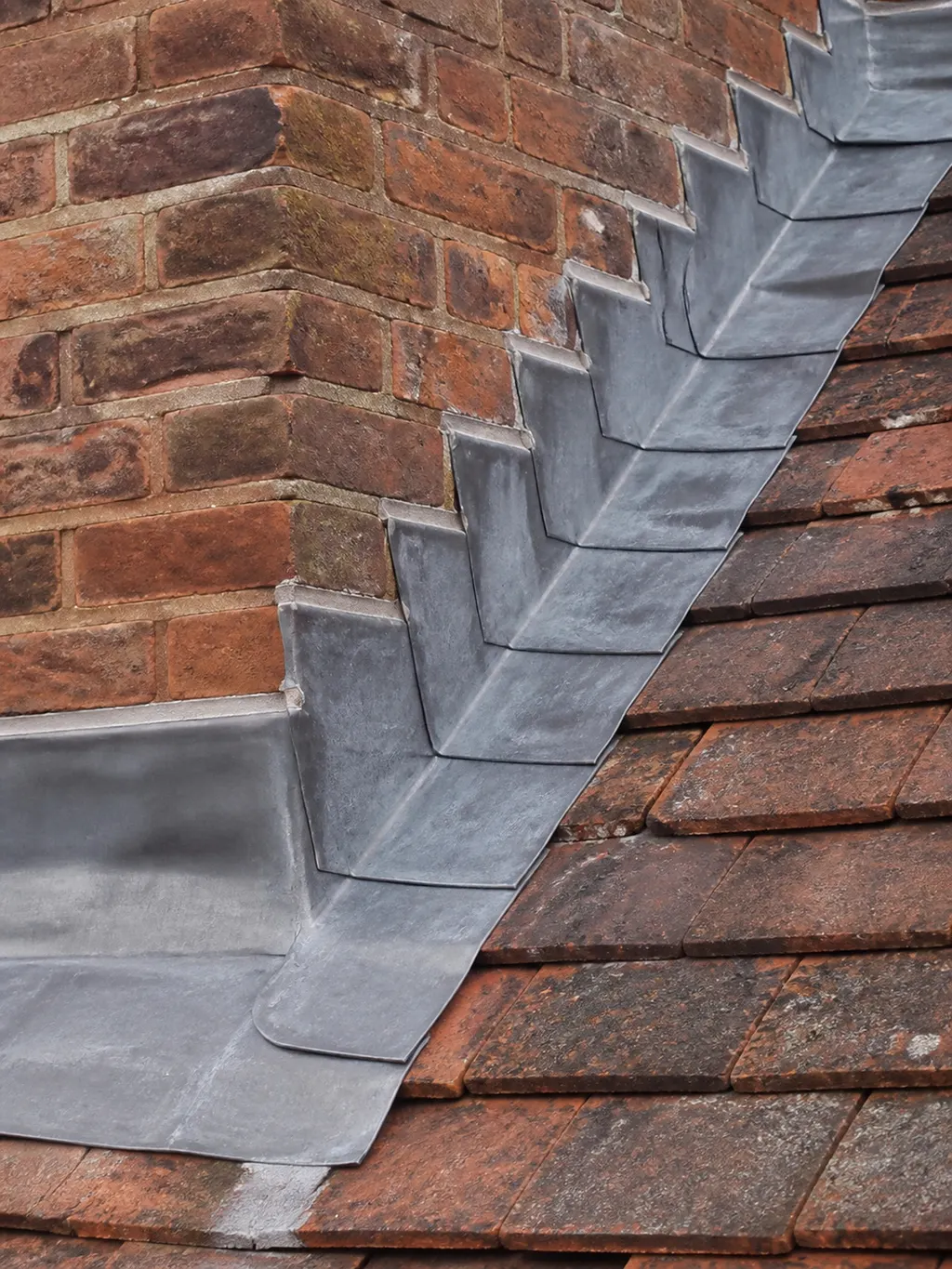
  • Chimneys, lead work and any abutment detailing the roof carries
  • Stripping and disposal, which on a large roof is a genuine line of its own

Free inspections and free written quotations, itemised, with what we are recommending and why. No expiry-date tactics and no pressure.

Get a Free Quote
06 — Recent work

Sussex roofs, start to finish.

A full re-roof from the day the scaffold went up to the day it came down, plus a few repairs from other jobs nearby.

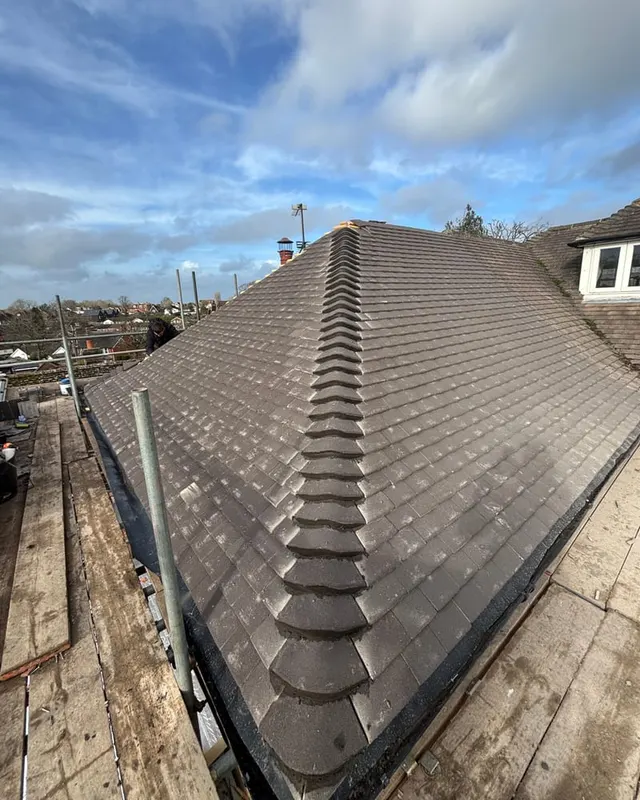
The finished re-roof, with new tiling run around the dormer and up to the ridge
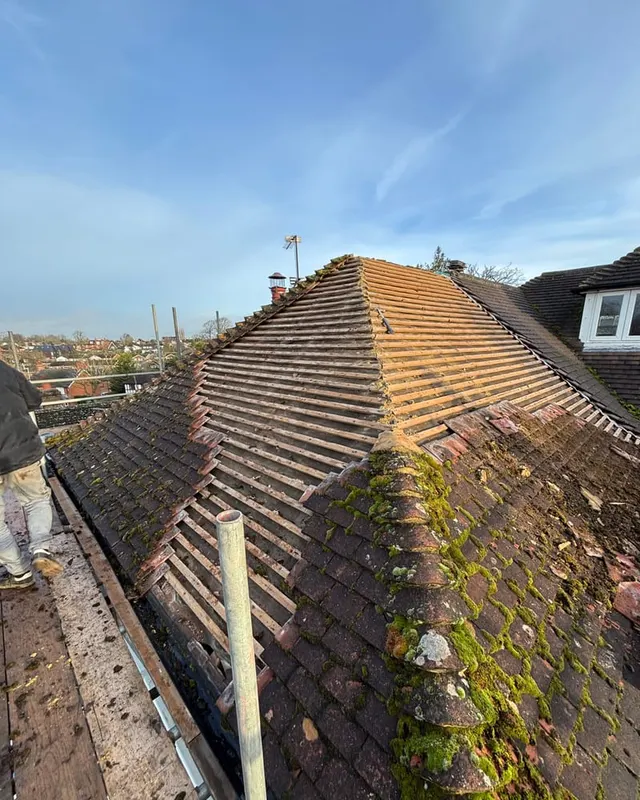
The same roof before work, with moss-covered tiles and a failed mortar ridge
BeforeAfter

Completed re-roof

Re-roofs · Henfield · February 2026

08 — Common questions

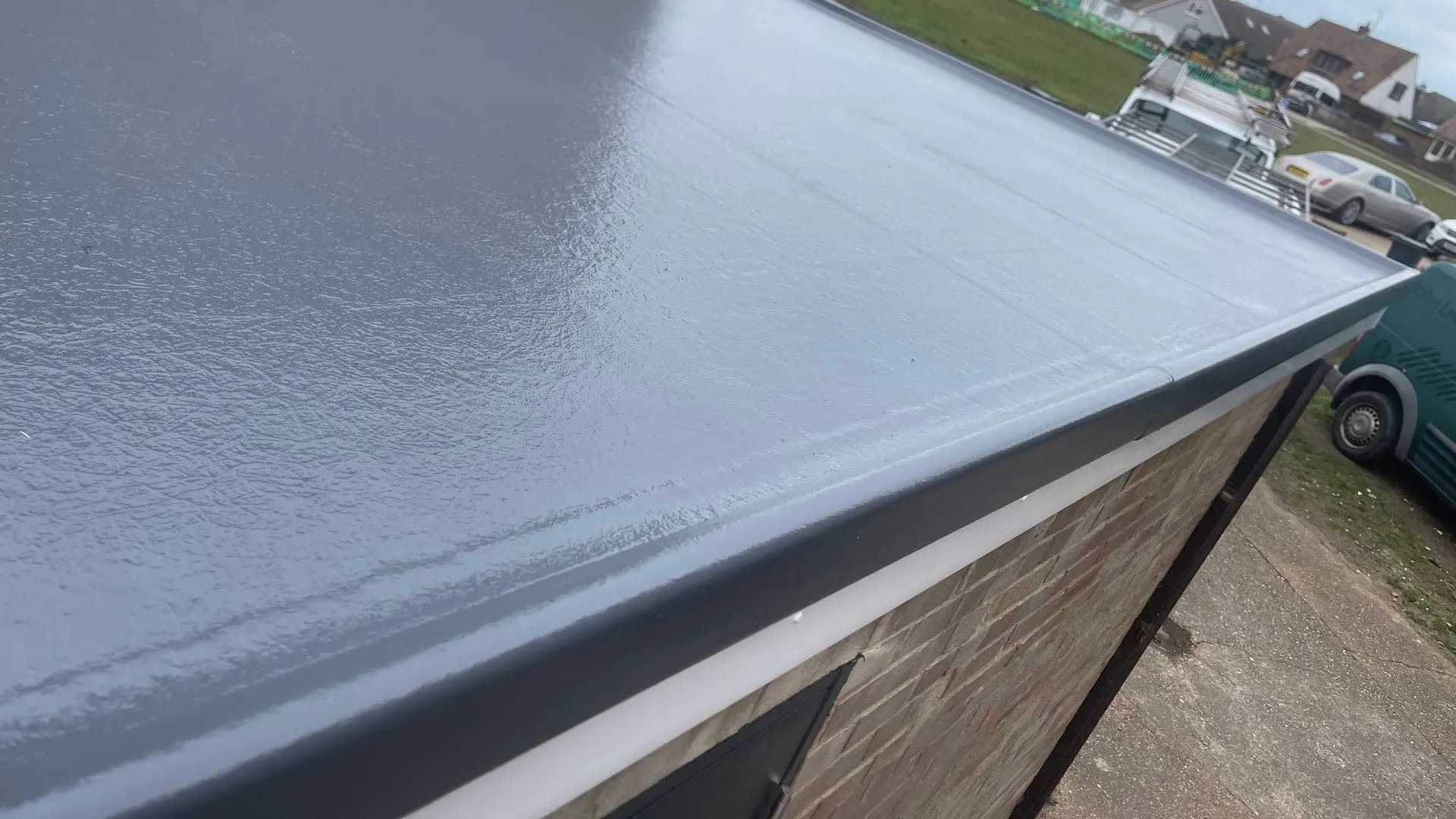
GRP Fibreglass: the questions we get asked.

Most domestic re-roofs run three to seven working days depending on size, pitch, access and weather. A single slope or a bungalow can be quicker; a large roof with several hips, valleys and a chimney takes longer. We give you a realistic window before we start rather than an optimistic one, and we tell you as soon as the weather is going to move it.

For a full re-roof, effectively always — it is a working platform, not an upsell, and it is what makes the job safe and the finish consistent. For a small repair, often not. We will tell you which category your job falls into when we quote it, and the scaffolding is itemised separately so you can see exactly what it costs.

Very often, yes, and we would rather. Slipped tiles, failed ridges, cracked valleys, lifted flashings and blocked outlets are all repairable. We only recommend a replacement where a repair would be money spent twice, and if that is where we land we will show you what we found and why.

Where they are worth reusing, yes — and on an older clay or handmade tile that is usually the better answer, because a modern replacement will not match. They come off, get sorted and cleaned, the battens and membrane are renewed, and the sound ones go back on with new tiles making up the shortfall. Where too many are cracked or delaminating, reusing them just builds the next problem in.

Yes. We undertake insurance work including storm damage, and we will photograph and document what we find so you have something to send your insurer. If it is actively letting water in we will make it safe first and sort the paperwork afterwards.

A written workmanship guarantee of 5 to 10 years depending on the system, plus a leak-free guarantee on new installations, issued on completion. Where the specified system qualifies, manufacturer-backed cover through the SIG Roofing One Warranty is available on top of that.

Moss on its own is cosmetic and is not a reason to spend money. It matters when it is thick enough to hold water against the tiles through a freeze, or when it washes down and blocks the gutters. We will tell you honestly which of those you have, and we would rather clear the gutters than sell you a roof you do not need.

Get the roof looked at before the ceiling is involved.

Send a couple of photos and a postcode and Dean will come back to you personally, usually the same day. If water is coming in right now, call instead — we run a 24/7 call-out.

Free written quotation

Get a free quote.

Tell us about the problem and Dean will come back to you personally, usually the same day.

Address
55 Grafton Road, Worthing, BN11 1QY
Hours
Emergency call-out 24/7

9.84/10 · 73 reviews · Fully insured · Free written quotations

We’ll come back to you personally. No call centres, no automated chasing.